Your Cart is Empty
4-string or 5-string?
Choose the range you need and the feel that suits you. Neither format is universally better.
| Your priorities | 4-string basses | 5-string basses |
|---|---|---|
| Low-B range | Standard E–A–D–G starts at low E. | Standard B–E–A–D–G adds five semitones below low E. |
| Tuning down | Notes below E need alternate tuning; heavier strings and setup changes may help. | Reach low B through E-flat without retuning; drop-tuned arrangements may still need alternate tuning. |
| Neck & playability | Generally narrower, with one fewer string to mute. | Generally wider; spacing varies, and the extra string needs muting control. |
| Genre fit | A familiar choice for rock, soul, blues and classic funk. | Useful for extended lows in modern metal, gospel, R&B and pop. Both suit many styles. |
| Transferring your setup | Familiar four-string patterns and string sets; gauge or tuning changes may need a setup. | E–A–D–G patterns carry across; adapt your muting and hand position. Use a five-string set and model-specific setup. |
| Common use cases | First bass, classic repertoire and gigs centred on standard tuning. | Low-register parts, changing keys and wider range with fewer position shifts. |
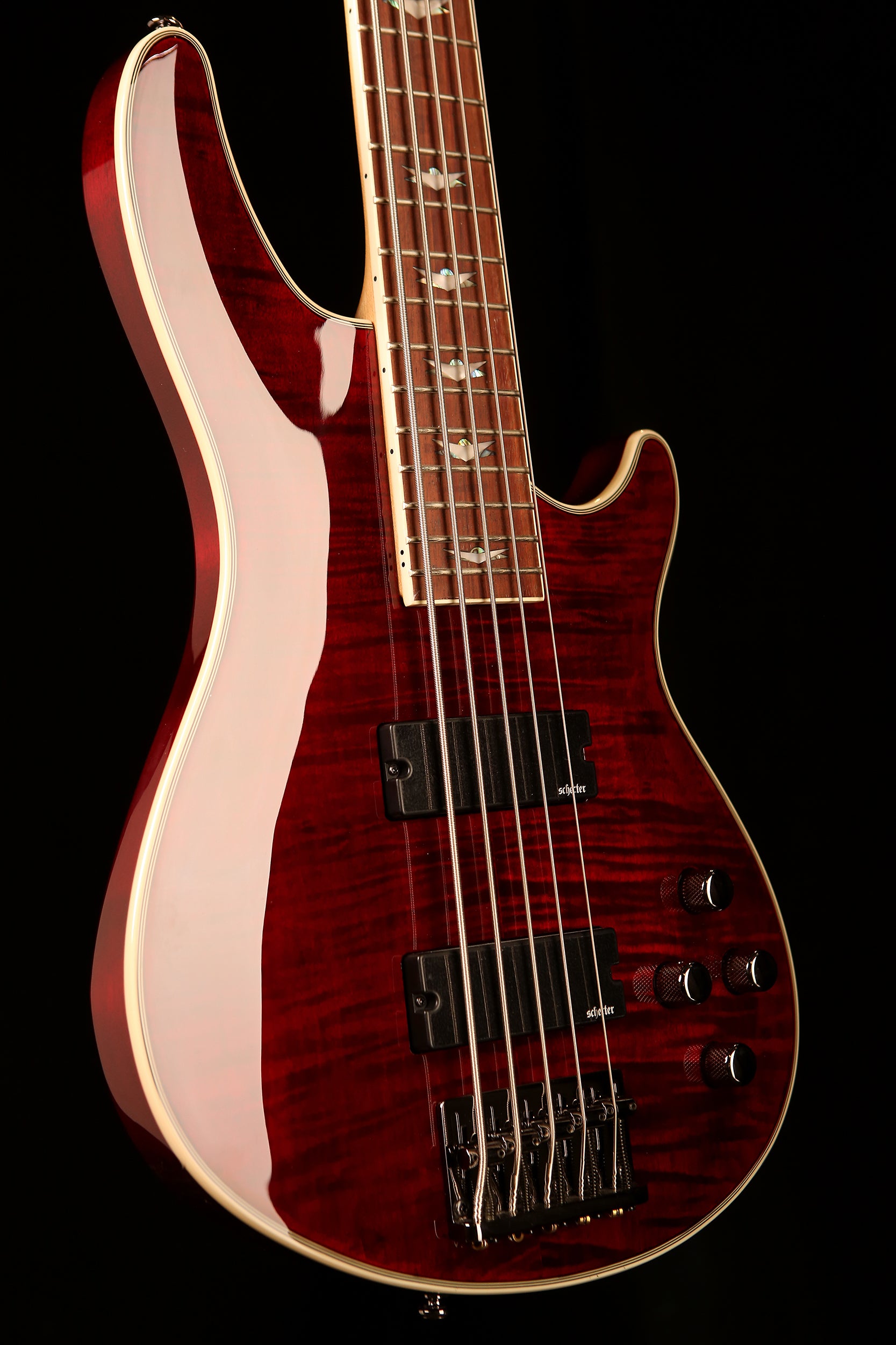
Prefer a familiar feel? Explore 4-string basses. Need extra low notes? Explore 5-string basses.